There is a certain fit between the pressure cover and the bearing, which is determined by the application location of the bearing, the type of the bearing, the size of the bearing, and the working conditions.
The function of the bearing housing cover
1. Axial positioning of bearing outer ring;
2. Dust prevention and sealing: Besides being capable of preventing dust and achieving sealing on its own, it is often combined with sealing components to achieve the sealing function.
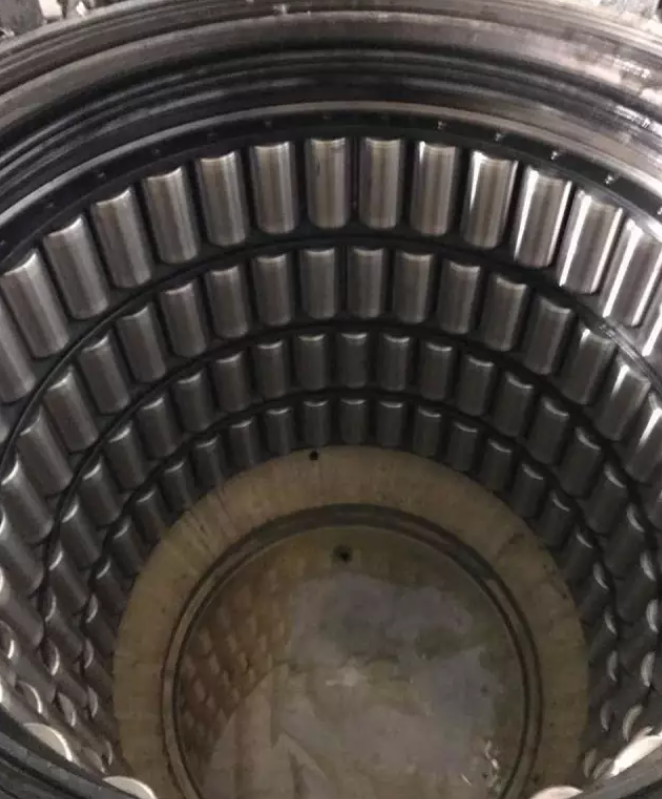
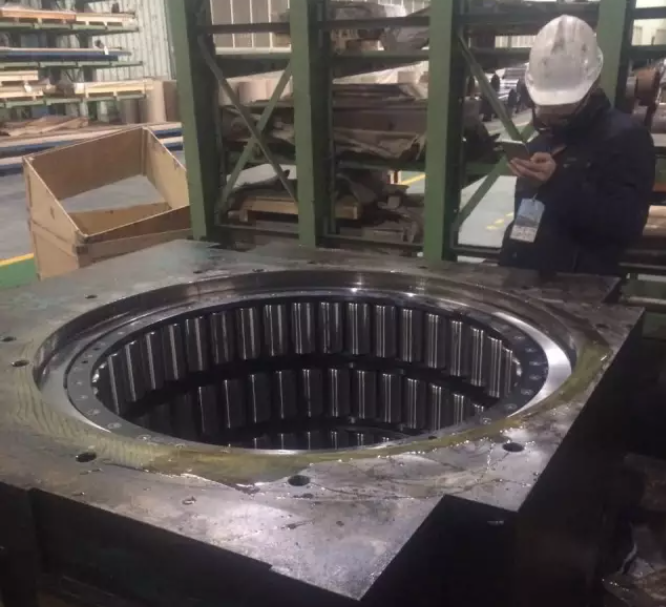
The fit between the bearing housing and the outer ring of the bearing
Should there be a certain gap or be tightly pressed between the bearing cap and the outer ring of the bearing?
According to the type of bearing
1. Cylindrical bearings. There is no need to consider whether clearance needs to be reserved. The outer ring of the bearing and the bore of the bearing housing are already in a clearance fit. To prevent the outer ring from rotating, the retaining ring needs to be tightened. However, there should not be too much clearance either. It should be adjusted according to the size of the bearing.
2. Conical bearing.
Cone bearings have axial and radial clearances. The clearances of cone bearings are adjusted by their retaining rings. The retaining rings are generally relatively thin and have a lower hardness than the inner and outer rings as well as the rolling elements. Therefore, a certain amount of clearance needs to be left between the outer ring and the retaining ring. Lack of clearance or excessive clearances will cause the retaining ring of the bearing to deform, reducing the bearing clearances. We know that bearing clearances are divided into original clearances, installation clearances, and working clearances. When the bearing is in operation, the temperature rises, causing the bearing to have a certain axial expansion. Generally, when installing cone bearings, a clearance of 0.01mm to 0.05mm needs to be reserved between the outer ring and the retaining ring.
3. Thrust Bearing.
When installing the thrust bearing, a certain gap must be left. The thrust bearing is a type of bearing specifically designed to bear axial loads. If the pressure cover is tightened, the bearing's clearance will disappear, and during operation, it will directly cause the bearing to overheat and burn out. The gap between the thrust bearing and the pressure cover can be referred to in the bearing clearance table and an appropriate clearance group should be selected. The selected clearance group is the gap value between the bearing and the pressure cover.
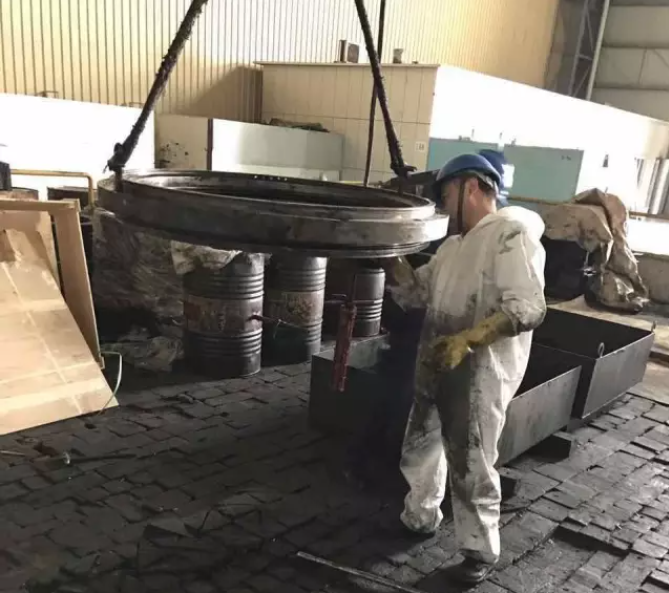
The method of adjusting the gap
The axial clearance inside the bearing can be achieved by moving the axial position of the outer ring.
1. Adjustment with gasket method: Place a set of soft materials (soft steel sheet or elastic paper) as gaskets between the bearing end cover and the end face of the bearing housing. During the adjustment process, first install the bearing end cover without the gaskets, evenly tighten the screws on the bearing end cover, and rotate the shaft by hand until the rolling elements of the bearing come into contact with the outer ring and there is no gap inside the shaft. At this point, measure the gap between the bearing end cover and the end face of the bearing housing, and add the axial clearance required for the bearing during normal operation. This is the total thickness of the gaskets that need to be placed. Then, place the prepared gaskets between the bearing end cover and the end face of the bearing housing, and finally tighten the screws.
2. Adjustment bolt method: Place the pressure ring on the outer ring of the bearing and apply pressure using the adjustment bolt. Before applying the pressure for adjustment, first measure the pitch of the adjustment bolt, then slowly tighten the adjustment bolt until there is no gap inside the bearing. After that, calculate the corresponding rotation angle of the adjustment bolt.


WeChat official account

Scan and focus on us
Address:24th floor, Tianjin Property Building, 590 Shengan Road, Huishan District, Wuxi City, Jiangsu Province Tel : 13861477666 E-mail : jsdmdbearing@163.com ©2020 江苏帝蒙德轴承有限公司. 版权所有 苏ICP备16008043号-4